
Pricing
Charge more on weekends is wrong half the time
The weekend premium is a market trait.
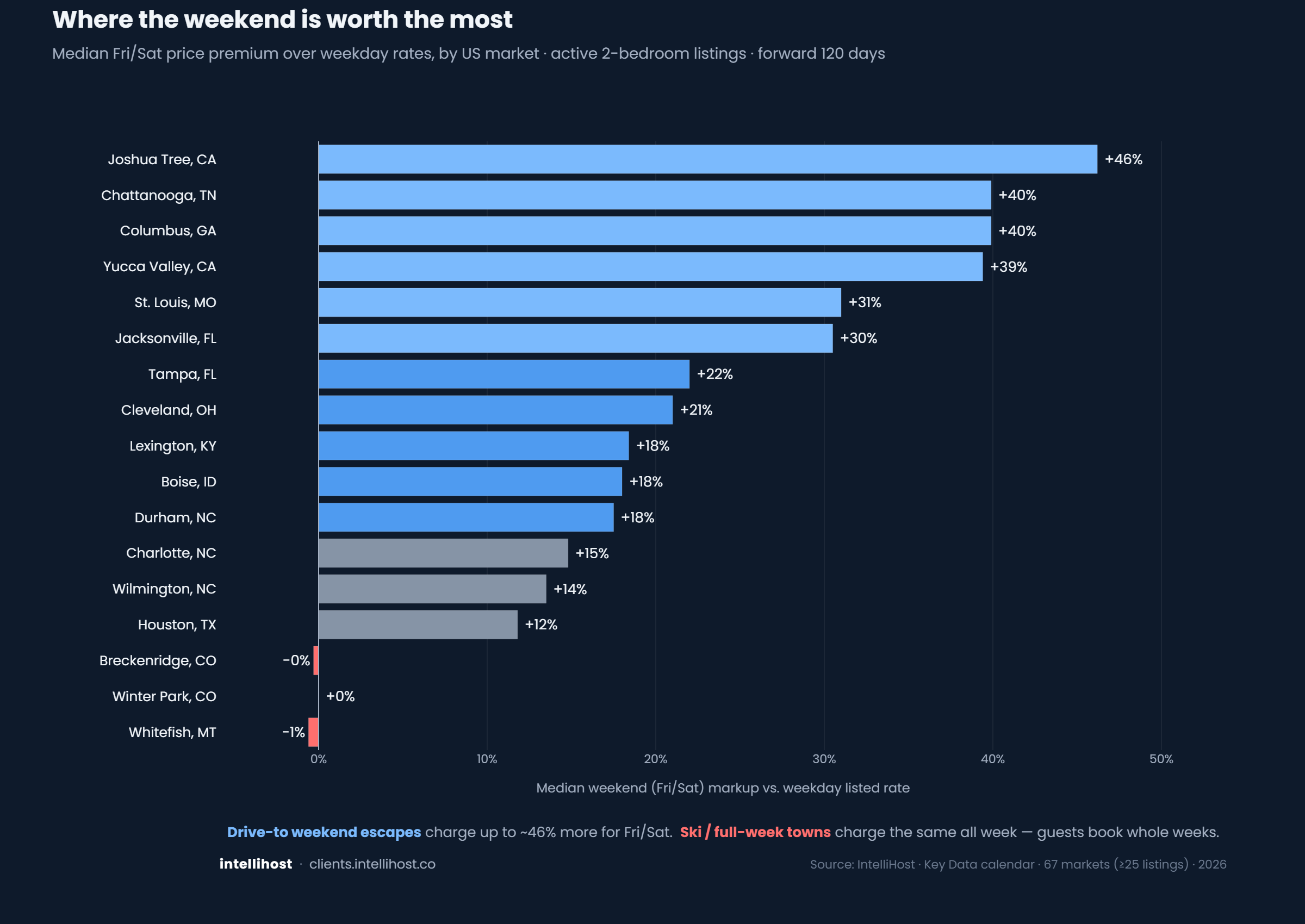
0% to +46% by market
Based on
6,845 US 2BR listings
Key finding: The typical Friday-Saturday markup over weekday rates runs anywhere from 0% to 46% depending on the market, based on 6,845 US two-bedroom listings.
The short version
There is no universal weekend premium. In some markets, Friday and Saturday nights command a big lift over the weekday rate. In others, the right premium is zero. If you copied a weekend rule from a blog or a friend in a different kind of market, you are wrong roughly half the time. Match the premium to how your guests actually book.
The data
Across 6,845 US two-bedroom listings, the typical Friday-Saturday markup over weekday rates ranged from 0% to 46%, depending on the market.
- Drive-to weekend-escape markets like Joshua Tree and Chattanooga stacked demand onto two nights and commanded large premiums.
- Fly-to and full-week destinations like ski towns priced flat, because guests book Saturday to Saturday.
Why it works
The weekend premium is really a demand-timing signal, not a pricing best practice. In a drive-to escape market, most trips are two-night getaways that pile onto Friday and Saturday, so those two nights carry scarcity and the rate can climb. In a fly-to or full-week market, guests book a whole week and check in on a fixed changeover day, so no single night is special and a weekend bump just prices you out of the search. The premium follows the trip length and travel mode of your guests. That is why the same rule can help one host and hurt another.
What to actually do
- Look at how your bookings actually land. If most stays are two or three nights clustered on Friday and Saturday, a weekend premium likely fits. If most stays run a full week on a fixed changeover day, it likely does not.
- Check what comparable listings in your own market do before you set a number. Do not borrow a weekend rule from a different kind of destination.
- Set your premium to match your market, then watch your weekend occupancy and pickup. If weekends sit empty while weekdays fill, your premium is too high.
The honest caveats
This is a descriptive finding, not a causal one. It shows the range of weekend premiums that exist across markets, not that any single premium caused more revenue. The study covers US two-bedroom listings only, so other sizes and countries may differ. It tells you that copying a one-size-fits-all weekend rule is risky. It does not tell you the exact premium for your specific listing.
Methodology
IntelliHost analyzed 6,845 US two-bedroom listings using IntelliHost and Key Data sources in 2026. We measured the typical Friday-Saturday nightly rate against the weekday rate within each market and compared the resulting premium across markets. Holding bedroom count constant at two keeps the comparison clean, so the differences reflect market type rather than property size.
Frequently asked questions
Should I always charge more on weekends for my vacation rental?
No. The right weekend premium ranges from 0% to 46% depending on your market. In full-week and fly-to destinations, a weekend bump can actually cost you bookings.
Which markets have the biggest weekend premium?
Drive-to weekend-escape markets like Joshua Tree and Chattanooga showed the largest premiums, because demand stacks onto Friday and Saturday. Ski towns and other full-week destinations priced closer to flat.
Why do ski towns price weekends flat?
Guests in those markets tend to book a full week on a fixed Saturday-to-Saturday changeover, so no single night carries extra scarcity. A weekend premium there just makes your listing more expensive without adding demand.